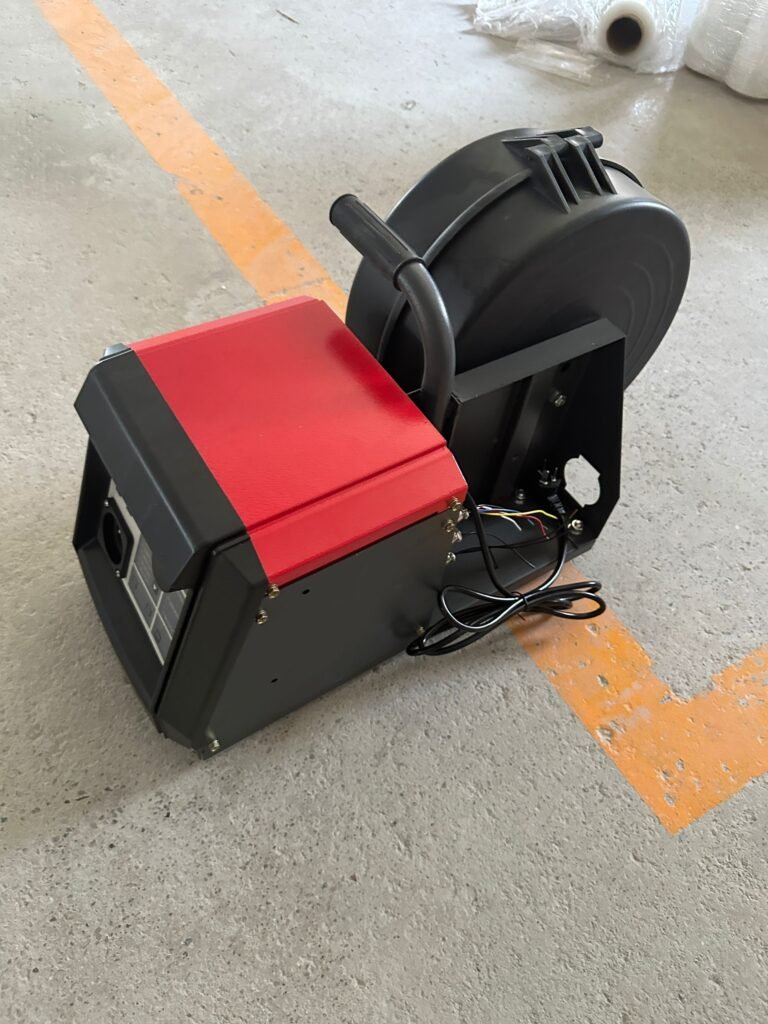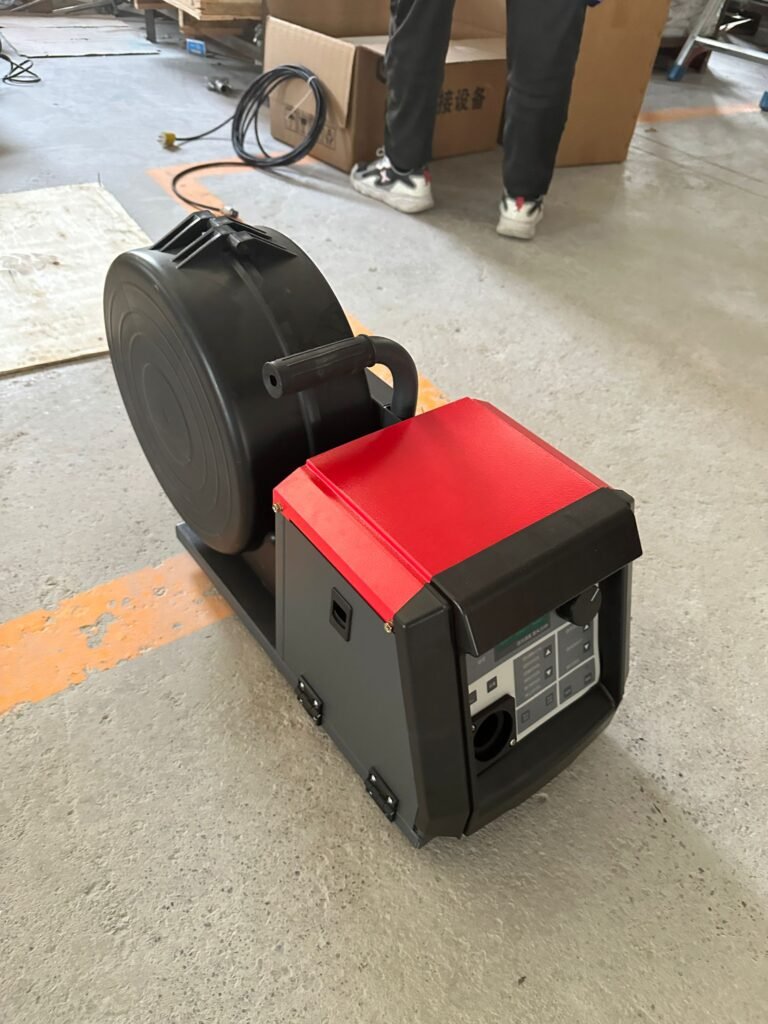
The wire feeding system of automatic welding equipment is one of the core components that ensure welding quality. Its malfunctions directly impact wire feeding stability, wire formation, and weld seam integrity. Common faults can be categorized into three main types: “abnormal wire feeding,” “abnormal wire condition,” and “system component failures.” Details are as follows:
Abnormal Wire Feeding Stability (Core Fault Category)
Wire feeding stability directly influences the consistency of welding current and arc length. Typical issues include wire feeding stuttering, fluctuations in feeding speed, and complete failure to feed. Specific causes and manifestations are outlined below:
| Fault Phenomenon | Core Causes | Specific Manifestations |
|---|---|---|
| Wire Feeding Stuttering | 1. Excessive feeding resistance: Friction between wire and conduit inner wall (due to small bend radius or inner wall wear), wire spool jamming (over-tight winding or rusted spool shaft); 2. Improper drive roller pressure: Too low causes slippage, too high deforms the wire; 3. Wire surface issues: Rust, oil, or oxidation increasing friction. | Intermittent feeding pauses, frequent arc breaks; wire jerking forward and backward at the nozzle, resulting in irregular or discontinuous weld beads. |
| Fluctuations in Feeding Speed | 1. Motor issues: Unstable power supply, worn carbon brushes (DC motors), bearing jams; 2. Control signal abnormalities: Faulty speed control module, fluctuating output from PLC or microcontroller; 3. Mechanical slippage: Worn drive roller teeth, excessive gear backlash, or insufficient lubrication. | Welding current/voltage varies with speed, causing inconsistent weld width and height; sudden acceleration (“overspeeding”) at high speeds or deceleration (“underspeeding”) at low speeds. |
| Failure to Feed Wire | 1. Power loss: Loose/broken motor cables, burnt-out motor; 2. Mechanical blockage: Wire tangling in conduit (diameter mismatch), drive roller jammed by debris or dust; 3. Control failure: Faulty feed switch, blown fuse, inverter/driver alarm. | No wire emission from gun upon initiation; motor silent (power issue) or emitting humming sound (mechanical jam). |
Abnormal Wire Condition (Affecting Weld Formation and Arc)
Although not directly part of the feeding mechanism, these issues are closely linked to component compatibility and parameter settings, manifesting as wire deformation or abnormal melting:
- Wire Bending/Deformation
Causes: ① Excessive drive roller pressure (flattening or bending wire); ② Undersized conduit inner diameter (wire forced through, causing deformation); ③ Poorly wound spool (“loose wire” leading to stretching and deformation during feeding).
Impact: Wire deviates from straight path, arc deflects sideways, causing lack of fusion on one side; deformed wire scratches nozzle, increasing spatter accumulation. - Abnormal Wire End Melting
Causes: ① Mismatch between feed speed and voltage (too fast causes “arc pushing” with balling end, too slow causes “burn-off” with shortened end); ② Misalignment between drive roller and contact tip (uneven current transfer and asymmetric melting).
Impact: Erratic arc, excessive spatter; porosity and slag inclusions in weld due to melted wire debris entering the pool.
Core Component Failures in the Wire Feeding System
The system comprises critical parts such as drive rollers, conduits, contact tips, and motors/drivers. Wear or damage to these components is a primary source of faults:
- Drive Roller Failures
Common issues: ① Worn teeth (loss of grip, causing slippage); ② Groove size mismatch (e.g., φ1.0mm groove used with φ1.2mm wire, leading to misalignment or deformation); ③ Damaged bearings (irregular rotation causing speed variation). - Conduit Failures
Common issues: ① Inner wall wear/blockage (accumulated oxide or slag; scratches from bending raise resistance); ② Improper length/bend radius (excessive length causes delay; radius <300mm increases friction and jamming risk); ③ Loose connections (gas leaks in gas-shielded welding, wire jamming at joints). - Contact Tip Failures
Common issues: ① Worn aperture (eroded by arc, resulting in wire wobble and unstable current); ② Burnt tip (from high voltage or poor contact, deforming the aperture); ③ Misalignment with conduit (causing wire deflection and increased friction). - Motor/Driver Failures
Common issues: ① Motor overload burnout (due to prolonged excessive resistance); ② Driver alarms (abnormal voltage, poor cooling, incorrect parameters); ③ Worn carbon brushes (in DC motors, leading to poor contact and speed fluctuations).
Troubleshooting and Prevention Recommendations
- Routine Maintenance: Weekly cleaning of conduit inner walls (with specialized tools), checking drive roller pressure (to prevent slippage or deformation), and replacing contact tips (every 50–100 meters of welding).
- Component Compatibility: Ensure wire diameter matches drive roller groove, conduit inner diameter, and contact tip aperture (e.g., φ1.2mm wire for φ1.2mm components).
- Parameter Calibration: Regularly align feed speed with voltage/current per welding procedure specifications (e.g., φ1.2mm mild steel gas-shielded welding: 8–12 m/min feed speed对应 18–22V voltage).
- Environmental Management: Prevent wire rusting (store in dry conditions, use promptly after opening), and avoid contamination by dust or slag (clean rollers and joints post-welding).
By applying categorized troubleshooting as above, faults in the wire feeding system can be rapidly pinpointed, minimizing downtime and maintaining consistent welding quality.