I. Daily Maintenance: Frequent Checks to Catch Issues Early
Brief 5-10 minute inspections before and after each use are essential to prevent minor issues from escalating. Pay close attention to the following:
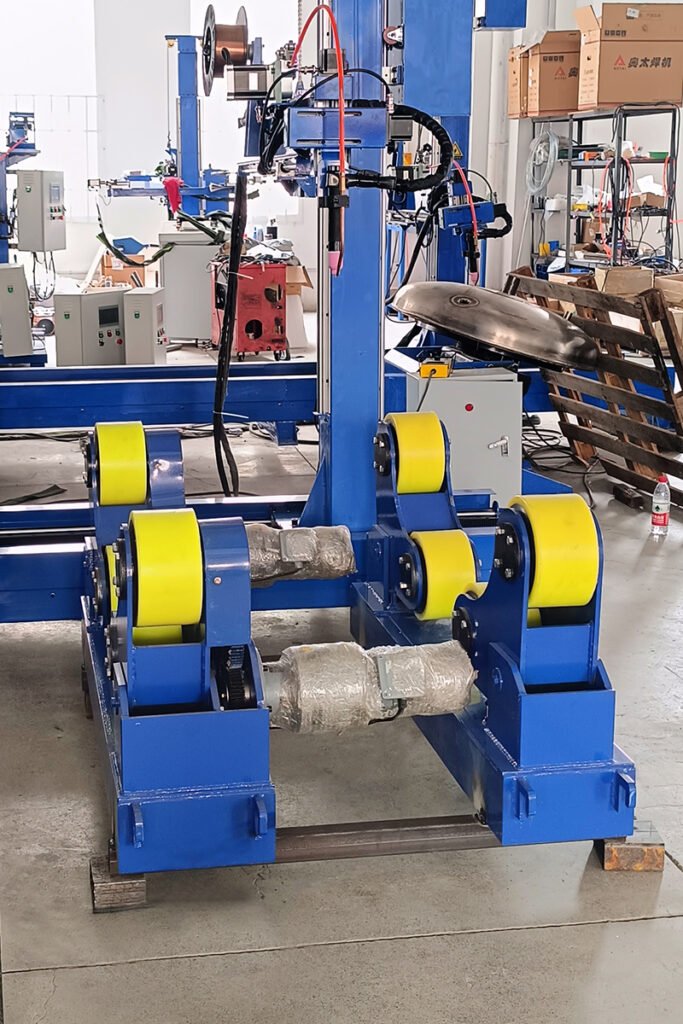
- Roller Assembly (Highest Wear Area)
- Clean and Remove Slag: After each use, remove welding spatter and debris from roller surfaces using a wire brush or compressed air. Embedded, cooled spatter can score the rollers and cause uneven stress, accelerating wear or cracking, especially on rubber/polyurethane wheels. For metal rollers, check for dents or deformation and remove any burrs.
- Bearing Lubrication: Check the lubrication state of roller bearings weekly (or every 20 operating hours). Open the bearing end cap; if the grease is dry, black, or contaminated, clean the bearing thoroughly and repack it with high-temperature lithium-based grease (which withstands welding heat better than standard greases). Increase frequency to every 3-5 days in humid or dusty environments.
- Clearance Check: Manually rock the roller. If you feel significant radial or axial play (exceeding 0.5mm), tighten the bearing housing bolts or replace the bearing. Excess play causes eccentric rotation, leading to workpiece misalignment and increased stress on the drive system.
- Drive System (Power Transmission Core)
- Motor Check: Before daily startup, feel the motor housing (at ambient temperature). If it’s unusually warm (>40°C) or emits abnormal noises (e.g., a humming vibration), inspect the power supply for voltage issues and check the bearings. Monthly, inspect and tighten electrical connections to prevent poor contact that can lead to motor failure.
- Reducer Maintenance: Check the reducer’s oil level monthly via the sight glass, topping up with industrial gear oil (e.g., L-CKC 220) if needed. Change the oil completely every 6 months or 500 operating hours. Before refilling, flush the gearbox with kerosene to remove metal particles and sludge that accelerate gear wear.
- Chain/Gear Lubrication: For chain drives, lubricate weekly with specialized chain oil, focusing on pins and rollers. Maintain proper tension (a sag of about 20mm is typical). For gear drives, inspect the meshing surfaces monthly for adequate lubrication and signs of wear like scoring or pitting.
- Control System (Preventing Unexpected Failures)
- Dust and Moisture Protection: Wipe the control cabinet and vents daily with a dry cloth to prevent dust buildup that impedes cooling. In humid conditions, use the cabinet’s dehumidifier or desiccant to avoid moisture-related short circuits.
- Sensor Calibration: Calibrate sensors (e.g., for centering or overload protection) weekly. Test with a correctly positioned workpiece; adjust or replace sensors that show delayed or incorrect signals to prevent malfunctions.
II. Operational Standards: Minimizing Human-Induced Damage
Proper operation is key to preventing premature component failure.
- Workpiece Handling: Center and Lower Gently
- Always position the workpiece on the centerline (deviation ≤50mm) to avoid overloading one side of the frame and rollers.
- Lower workpieces slowly to avoid impact, which can damage gears, rollers, and loosen frame bolts.
- Smooth Start/Stop and Speed Control
- Start at a low speed (1-2 Hz), confirm stable rotation, and then accelerate gradually. Avoid jarring full-speed starts.
- Decelerate to a low speed before stopping to prevent workpiece sliding and resultant roller wear.
- Respect Load Limits
- Never exceed the rated load capacity. Overloading risks motor failure, accelerates gear wear, and can permanently deform the frame.
- For non-cylindrical workpieces, calculate the equivalent diameter to ensure appropriate speed and prevent uneven roller wear.
- Protection for Special Workpieces
- Use high-temperature insulation pads on rollers when handling preheated workpieces (>300°C) to protect rubber/polyurethane wheels from heat damage.
- Apply anti-corrosion spray to rollers when welding materials like stainless steel or aluminum, and clean off any corrosive fluxes promptly.
III. Periodic Maintenance: Scheduled In-Depth Service
Address hidden wear and aging through regular, thorough maintenance.
| Cycle | Components | Key Tasks |
|---|---|---|
| Monthly | Frame Structure | 1. Check and tighten all frame bolts, especially on roller seats and motor mounts. 2. Inspect welds for cracks; grind and re-weld any found using compatible materials. |
| Quarterly | Roller Assembly | 1. Disassemble sample rollers; check bearings for pitting (replace if >10% affected). 2. Measure wheel diameter/wear (replace rubber wheels if wear >5mm; machine metal wheels if out-of-round). |
| Semi-Annually | Drive System | 1. Inspect reducer gears for wear (replace if tooth thickness worn by >15%). 2. For brushed motors, check/replace worn brushes (>3mm wear); clean internal dust. 3. Replace drive system oils and clean reservoirs. |
| Annually | Control System | 1. Verify inverter output stability (±5%); recalibrate or replace modules as needed. 2. Replace relays and contactors (lifespan ~1-2 years) to prevent contact failure. 3. Inspect wiring for damaged insulation and replace if necessary. |
IV. Environmental Control: Mitigating External Aging Factors
- Control Humidity: Maintain workshop humidity below 50% using dehumidifiers if necessary. For extended storage, apply anti-rust oil to exposed metal parts and cover the equipment.
- Reduce Dust: Use protective curtains around the work area and regularly clean control cabinet vents and motor cooling fins with low-pressure compressed air.
- Manage Temperature: Provide additional cooling (e.g., fans) for the motor and control cabinet if ambient temperatures exceed 40°C. Avoid direct sunlight on the equipment.
Summary: Core Principles
The strategy for maximizing lifespan hinges on “Prevention First, Correct Operation, and Scheduled Maintenance.” Avoid two common mistakes:
- Don’t “Run to Failure”: Addressing small issues promptly prevents costly chain-reaction failures.
- Avoid “Over-Maintenance”: Excessive disassembly can damage seals and fits, inadvertently increasing wear. Follow recommended schedules.