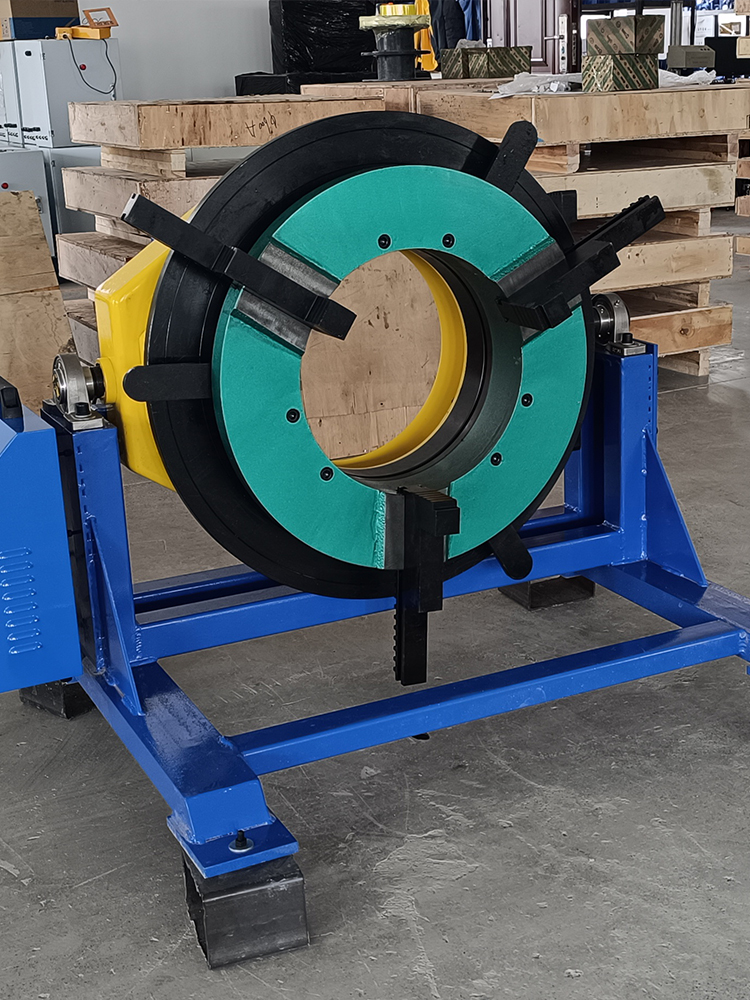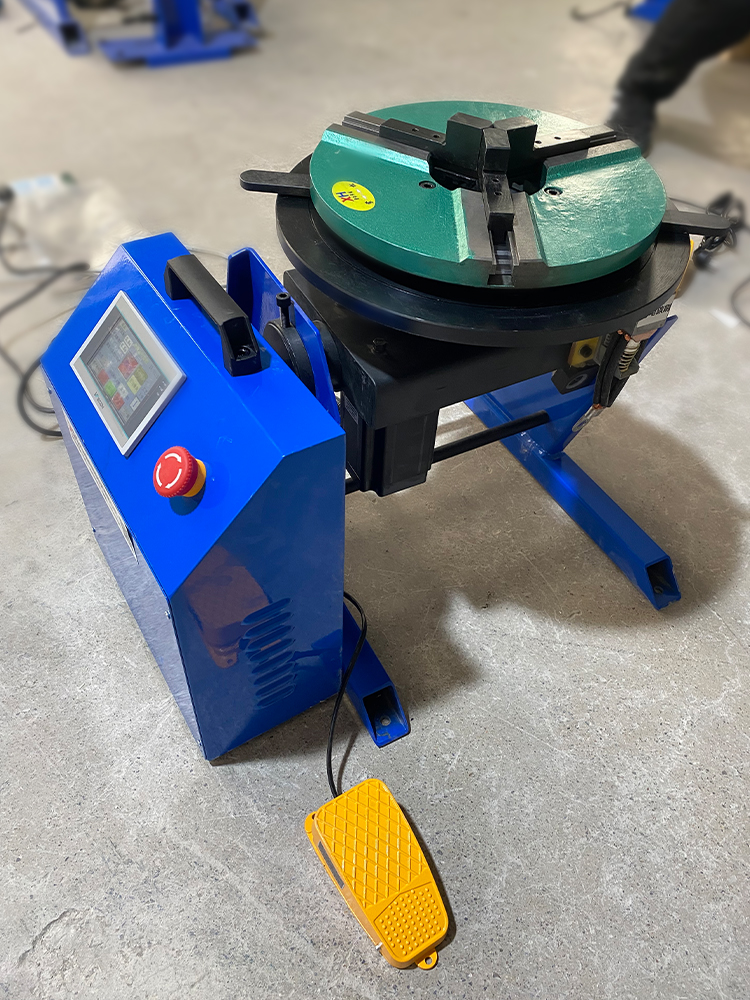
- Ensures Welding Quality
Many common welding defects—including lack of penetration, porosity, and undercut—occur when welding in challenging positions such as vertical or overhead. By repositioning the weld into the flat position, the positioner helps maintain a stable molten pool and ensures even deposition of the filler metal. This leads to a significant reduction in defects, especially when working with process-sensitive materials like stainless steel and high-strength steel. - Increases Welding Efficiency
In manual welding, operators often need to reposition themselves or use scaffolding to reach the weld joint, which is time-consuming and inefficient. With a welding positioner, the workpiece orientation is adjusted automatically, enabling continuous welding—whether using robotic systems or manual methods. This can reduce welding time per seam by 20% to 40%, while also cutting down on non-productive time spent on repositioning and handling the workpiece. - Improves Working Conditions
The positioner minimizes the need for operators to work in uncomfortable and ergonomically harmful postures, such as bending, twisting, or overhead reaching. This helps prevent work-related injuries, including back strain and neck problems. Moreover, by bringing welds into an accessible and visible area, it reduces the operator’s direct exposure to welding fumes—especially when used in combination with fume extraction systems.